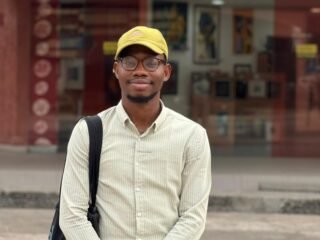
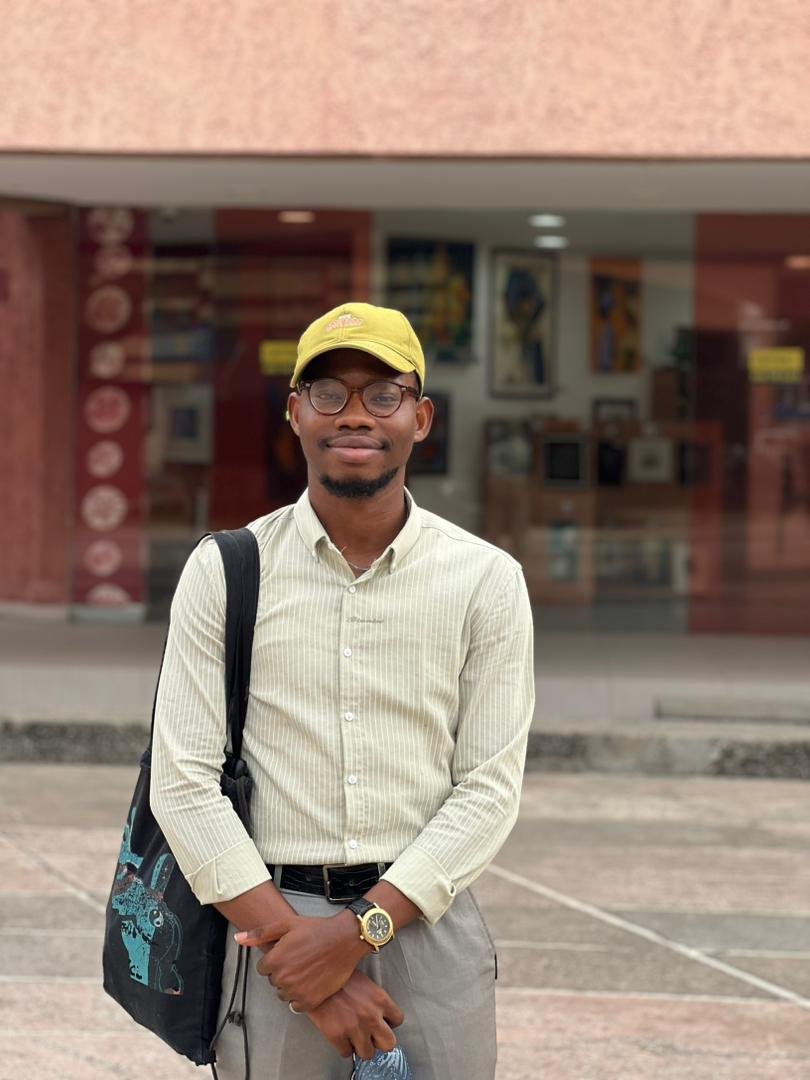
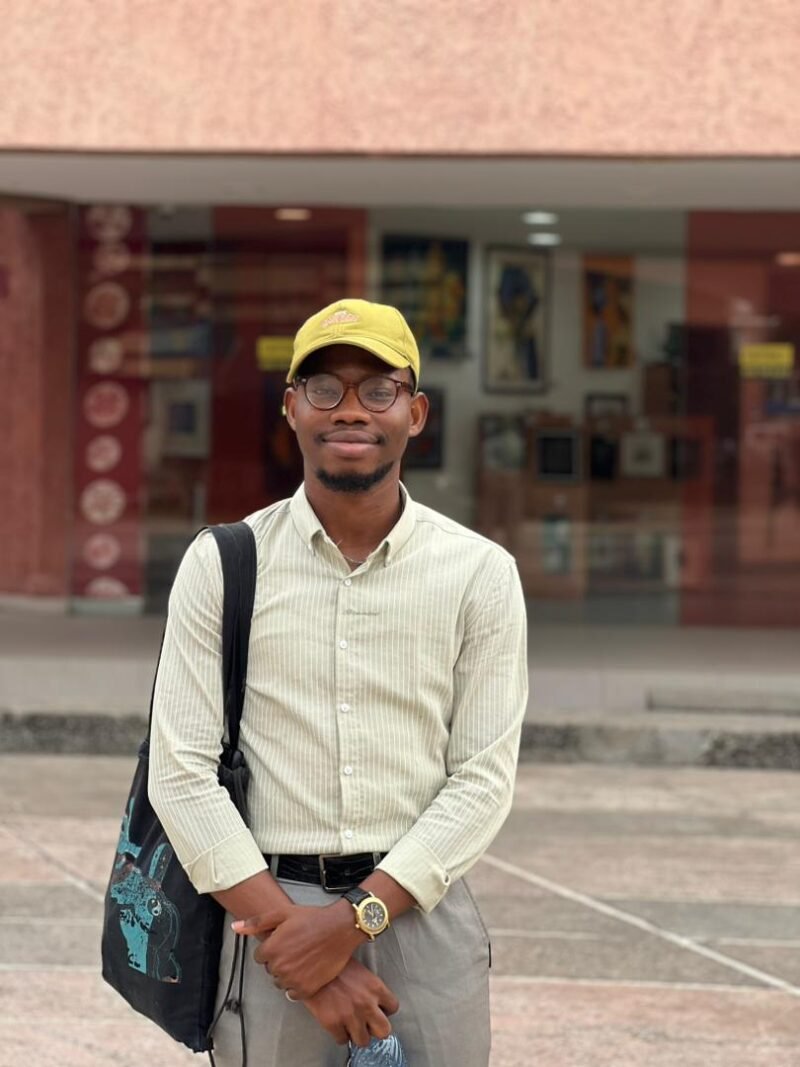
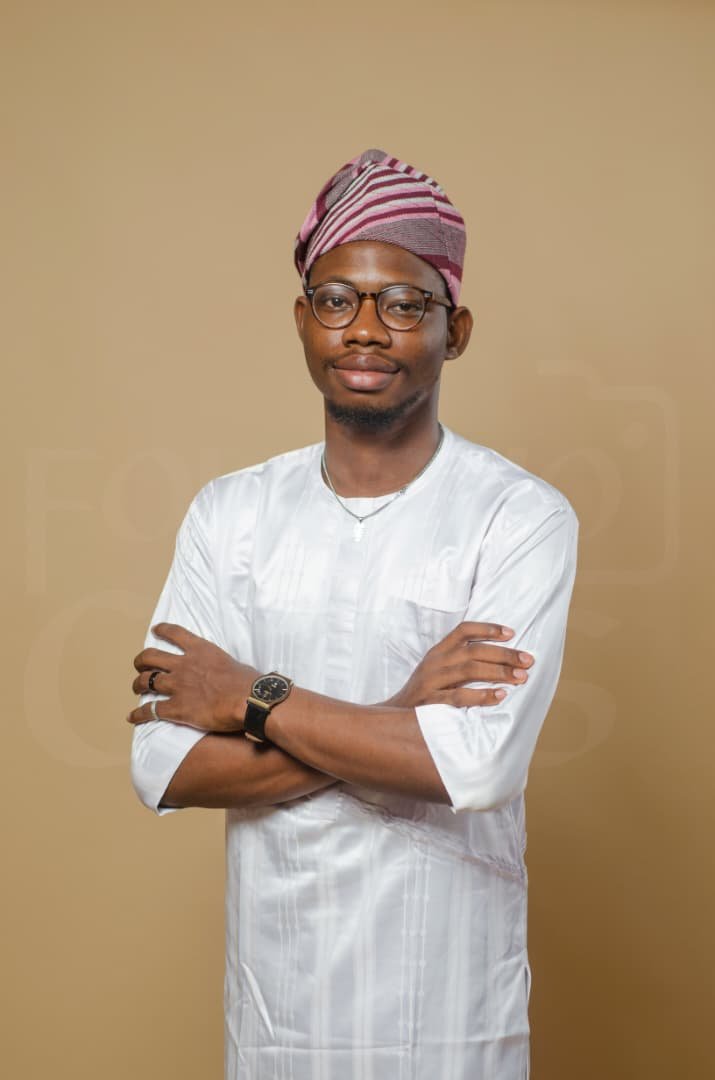
John Eriomala is the hardest working music journalist in Nigeria. He came on my radar about four years ago. I posted a request on Twitter (now X) seeking five seasoned music writers to write (reviews) of five new albums. John responded and wrote a compelling review of Rema’s debut album. I found his writing lively, propulsive, humorous, even. It reminded me of the kind of music writing I enjoyed. Over the years, John’s work has gotten even better, a testament to his hard work honing his writing. What is even more compelling is that he is in medical school. I discovered my interest in writing about music whilst in medical school too. I think it is important to spotlight this gifted writer, who, like me, has chosen to write about music despite the rigours of medical training. He is really one to watch out for. His current biography at Culture Custodian reads, “John Eriomala disagrees with your GOAT rapper. He writes too.”
—Dami Ajayi
Dami: John, how did you find music writing?
John: Like most other culture writers, I found music writing secondary to the music itself. My childhood consisted heavily of my parents’ old school records and Afropop staples playing over the radio—Classic FM, Raypower FM, and Inspiration FM—along with passive, then active absorption whenever I could find music. In my early teens, I began paying more attention to the Entertainment section of PUNCH, tracking what I heard on the radio and TV with what I read. As my world expanded later on with the internet, I discovered whole new worlds of reviews, analysis, gossip, and everything in between from YouTube and Wikipedia deep-dives. Pitchfork, Pulse, and Medium articles came along not much after. During the window between my graduation from secondary school in 2018 and resuming at UI in 2021, I became somewhat fanatical about culture writing, especially after reading articles by the Pulse bunch (AOT2, Ehis Ohunyon, Osagie Alonge, and Joey Akan). It was fascinating reading in-depth cross-cultural stuff the same way the American pubs were writing theirs, downloading albums and songs termed important, comparing that with my own opinions, and tumbling down rabbit holes. By COVID, I was practically waking up to YouTube and music writing websites every day. Fantano and Dead End Hip-Hop to Dennis Ade Peters on FilterFree to Vice to NATIVE to Motolani’s quickfire essays to Complex, and so on. That was the year I settled on the desire to do exactly what these people did. The knack for journalism already existed in secondary school, but it was 2020 that sold me on music writing completely.
Dami: Let’s talk a bit about the music that moved you back then and how it was written about at the time. When I got into music blogging in the mid-to-late 2000s, it was partly to be part of a larger conversation that was blossoming at the time. When I return to my first blog, I find reviews of albums like Mushin 2 Mo Hits and Chief Executive Omo-Ita. At the time, I felt I was also writing to feel a void because traditionally there was no culture about writing exhaustively about music. Was it the same for you?
John: Yes, I’d say it was. Writing to be part of the larger conversation and writing to fill a void. I realised that while there were people writing on the same subjects I did, there were differences in opinion and also historical threads that were missing to connect analyses. I recall that the first full-length review I ever wrote was for Blaqbonez’s Sex Over Love in 2021. I’d read a few takes before deciding to write one—a misstep I’d later learn to avoid—but felt they failed to explore the relevance of a supposed leader of next-gen rap pushing melodic trap, among other things. In the end, the review ended up as this winding breakdown that could have been a thousand words shorter, but it was joyful to still be able to add new material to everything else that exists.
For the music, I was and still remain a Kennis Music/Raypower boy, so everyone from 2Baba early on to Jo’el later, had me in a chokehold. Then Ásà (Ásà and Beautiful Imperfection were the soundtrack to Primary 6), MI Abaga, Wizkid, Wande Coal, to name a few. By the time I began curating what I read, I was leaning into sub-mainstream Nigerian hip-hop (Show Dem Camp, Ladipoe, Paybac Iboro, Boogey, etc.) to build on my overfamiliarity with the American scene. An early struggle before the pandemic, and my being able to afford streaming, was finding albums online.
With regard to how music back then was written about, newspaper journalists tended to focus very little on the meat of the music and more on artists’ lives. But when I started reading stuff online, I realised that writers cared as much about artists’ music as their lives, if not more. For the Nigerian critics whom I consumed, in particular, track-by-track album reviews were quite common, as was the word ’crooning.’ There was also a tendency to situate reviews in the larger context of the artist’s career. It’s not surprising that nowadays, a lot of these elements are still unsurprisingly valuable.
Dami: I have had moments like yours too. Writing in defense of art or to push a strong opinion. So what has really changed for you since that first review five years ago? What has also changed in the Nigerian music landscape, particularly melodic rap that you find worthy of note?
John: A lot! First, I realised that there was so much more to being a culture writer—way more than writing reactionary opinion pieces and reviews. Then, also curating my reading experience to the point where I could identify styles and schools of thought, realising just how much of an overlap journalism has with creative writing, and exploring the possibilities with writing. Like when I first read Nelson C.J’s VICE article about Celine Dion and realised that I hadn’t even thought about Nigerian writers in foreign pubs. Or finding your work in 2022 and seeing the freedom of unorthodoxy. I’ve also become more political in my writing, borrowed more across different culture writing fields (visual arts, film, literature etc), and prioritised work that can outlast me.
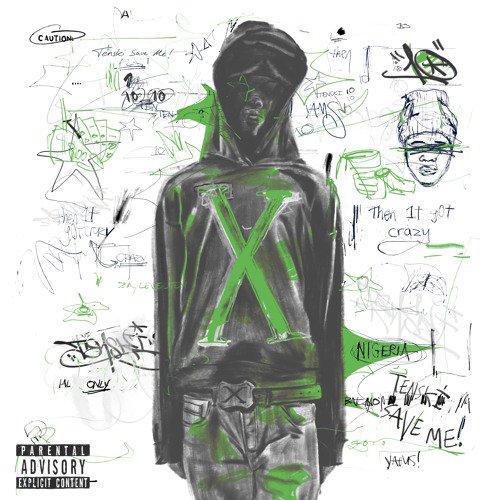
Melodic rap has had more downs than ups in the time since, but thankfully, it’s in a better place overall. Psycho YP’s sacrifices weren’t in vain. Perhaps the most noteworthy achievement would be a melodic rap album, Zaylevelten’s then 1t g0t crazy, being arguably the best project released by a Nigerian artist in 2025.
Dami: Freedom of unorthodoxy is a gem of phrase! I suppose it sits within the vision of the pioneers of music criticism in the 70s. Sometimes I wonder how much new journalism impacted their work. One point that you have made that must be reiterated is how the blog era threw the keys of music journalism to us all. It became accessible to write expansively if not exhaustively about the music you care for. In the mid to late 2010s, Nigerian journalists based in Nigeria began to write about the music for international magazines. It made sense because there was a visceral connection to the music and a comparative access that they had to the music. Of course that did not last and COVID-19 played a role in that and the overall diminishing returns and institutional attention/care for culture criticism. Tell me a bit more about what you mean about being more political in your writing and creating work that can outlast you.
John: Every work of art is inherently political, either due to what it says or what it doesn’t. And while it’s so easy to get lost in the sauce of ’quality,’ it’s essential to always write with sociopolitical considerations. I’ll use a recent story I worked on as an example. While reviewing Ayra Starr’s new album, one of the recurring motifs was ’money’ and the abundance thereof. However, listening intently and placing her lyrics within the context of society, you’d realise that she was singing about money not in the sense of transactional relationships, as is the norm for most Afropop offerings, but with agency and demanding her romantic partners do more than wave cash around. In fact, on the song with FOLA, Tornado, there’s a dynamic where she sings about her intended lover showing up beyond chit-chat and money, whereas FOLA sings about spraying his lover if she boogies down with him. This less transactional, more agentic form of romance was a rarity when Tiwa, Waje, and the other female pop stars opened the doors of femme fatalist pop in the 2010s. Contrast that with Asake’s M$NEY, which also shares the same motif but is more aspirational and about reveling in luxury. That also tells us a lot about where he’s at mentally, explaining the mild soullessness that accompanied the album compared to, say, his first two. Class. Sex. Religion and beliefs. Activism. Morality. Stereotypical government-related politics. Society. Everything is woven into art, even when nothing is said.
At some point early on, I realised that volume and reach are important, but legacy is even more important. My second-ever paid gig came about because Dolapo Amusat of WeTalkSound read an article I’d written for IndyPress in UI and appreciated the historical links in the work. For context, the article was an analysis of UI’s rap scene, and the historical angle was merely a paragraph or two at the end, but he acknowledged the fact that someone would take time to link 2024 to 2018. Even now, I doubt there’s a way to read about the rap scene in UI and not stumble on that article. Similarly, while curating taste, I’ve seen work from the early 2000s being more relevant than articles written in 2026. I’ve combed the NET website for features that remain important today. For the literary scene in particular, I keep discovering essays that will matter even at the end of the millennium—work whose absence will be felt, even when people don’t know it. That’s the kind of work I constantly aspire to. Work that can speak for me in my absence. Having discovered a fair number of my favourite writers this way, I wouldn’t have it otherwise.
Dami: Might we be correct then to say our contemporary musicians at least share a concern or anxiety about money with the older musicians. For most musicians their careers are sharply divided into two; without money and with money. In a society like ours where money is power, status or at least comfort, when Ayra sings about wanting more than the flash of cash, she may be interrogating the transactional nature of relationship but does she dwell on this topic enough to leave some kind of impact on her teeming listeners? Is it a conversation meaningful for her to have given her privilege? I suppose we could say, dont ruin baby steps. But baby steps to what exactly, modern feminist chants or independent woman anthems? As you may know, I am fascinated by music history, and I have devoted a lot of my energy to the internet equivalent of crate-digging. In your own view, what are the real historical moments that fascinate you and are important to contemporary Nigerian music?
John: Now, that’s a question that’s tough to sit with. The average listener won’t devote as much attention to an album as a critic will, and as such, it’s easier to arrive at a conclusion of intent from this end. But in terms of impact, I struggle to see the audience taking her up on her offer of independence, neither does the nature of her promotion and marketing lend credence to that. So, in a sense, it’s a muted conversation. Is it meaningful enough for her to have given her privilege? Yes. But the impact thereof is much in doubt.
There are quite a few, actually. Kennis Music dominating the landscape in the early 2000s for the aforementioned reasons. The switch to more indigenised hip-hop in the late 2000s and dominance of the local rappers not long after. Final moments of the Alaba rush and the rise of music blogs. Alté hitting the mainstream in 2017. #EndSARS. Rise of the 2020s guard (Rema, Fireboy, Ayra, Tems etc). Hip-hop’s peak between 2019 and 2021 (greater than the supposed golden years, in my opinion). YBNL 2.0 and Mavin 2.0. Fuji’s resurgence with Asake. D’banj’s surprising fall-off after inking the GOOD Music deal and how that stalled Afrobeats to the World to an extent. Storm Records’ somewhat quiet reign. Project Fame’s first two seasons minting Iyanya, Praiz, and Chidinma and Timi Dakolo and Omawunmi’s West African Idol season. The slow decline of talent shows. I could go on, but these are the few that come to mind.
Dami: I think the decline of talent shows in the elaborately produced way we remember them was replaced with the freer and more democratic even if gimmicky rein of social media particularly Tik-Tok. A good number of journalists and commentators have said we are firmly in the Post-Afrobeats era. This I believe in the aftermath of a post-COVID, post-algorithm, post-Afrobeats-to-the world. What does that even mean to you?
John: Until I saw the term ’post-Afrobeats’ in AOT2’s video essay, I didn’t realise just how much it was needed. I agree that we’re at that point and currently it looks like having to re-evaluate the concept of an ’album.’ Now that everyone has come to terms with the necessity of albums post-streaming boom, we appear to be at a crossroads of LP oversaturation whereas quality has dipped somewhat. It looks like experimentation hitting new heights, artists borrowing inspiration from the past even more. It looks like live shows attaining even more relevance. We’ve always been a market for live performances, but in the past few years there’s been even more clamour for in-person events as fans chase rewarding experiences. This also means we urgently need physical infrastructure. It looks like severe fragmentation of the mainstream—monoculture death and the resurrection of the niche. It looks like a scramble to define the next narratives in Nigerian music, a crusade that must not be left to the West, yet again.
Dami: It was inevitable—wasn’t it?—these sequelae of streaming. The glut has dampened quality and the global attention has created more barriers to access, particularly for unpolished talents. The windfall from Afrobeats to the World campaign has not trickled down, but the grimmer consequences have. We entered the streaming era with glee, abandoning the wonky Alaba model infrastructure, but streaming has its own problems, which have become even clearer to us now. From streaming-revenue apartheid to the monoculture you have spoken to. So what happens now? We know there is no comic superhero to save the day; how do we get to the next inflection point? I mean, beyond overstating the problem, what’s the prognosis for Afrobeats as a modern genre?
John: At the risk of being too optimistic, I think Afrobeats is set for another renaissance led by the 2020s class. However, I don’t know that I have definite answers as to ’how.’ We could copy the K-Pop model with government-backed funding and guerrilla marketing, but resources for that are in short supply. We could attempt to integrate even more into the Western markets via R&B, but the Tems experiment isn’t guaranteed to work for everyone. We could borrow from Latin America like they’re doing now, but if Amapiano taught us anything, it’s that this could very well become a nightmare for the genre’s health. I really do not know what “the” solution is. What I do know is that, as writers and media personnel, we have to keep spotlighting the good stuff, critiquing with barbed pens when necessary, and curating taste for the audience at home and abroad.
Dami: That is the only job we have; anything else is a distraction. Tell me how do you combine your interests? Medical school with writing some of the best music journalism. How do you read your work and accomplishments? How does it read with your colleagues in medicine and your colleagues in media?
John: Every time I’ve dealt with a variation of this question in the past year thereabout, my response has been the same: “Journalism is winning. There’s no balance.” It’s been a tough ride and perhaps more of a sacrifice than should be, given the jealous nature of medicine. I’m still finding my feet, to be honest, learning from the few who have treaded this medico/writer path before like yourself and Oris Aigbokhaevbolo. And while it’s not a path most people seem to understand, talk more agree with, friends, my partner, and family, to some extent, have been supportive. Colleagues from school have been somewhat supportive too.
In terms of accomplishments, forging relationships with names I looked up to, who continue to do impactful work even now, has been a highlight. Every other month, there’s a repost or DM from another esteemed writer that makes me go, “Damn! This person reads my work.” The earliest example of that was when a personal essay after Mohbad’s passing drew reactions from two of Pulse’s old Pulse. And most recently, yesterday, an individual from Fela’s estate reached out concerning a story I wrote about the Anikulapo/Ransome Kuti family. In his words, he had never read “any such biography containing as much information as I provided.” Recognition from peers has been equally encouraging, and it goes both ways. But I know there’s more. There are always new frontiers. Two years ago, I was concerned about winning national awards at the campus journalism level. Now, I’ve written a definitive piece that drew acclaim from an ex-Rolling Stone writing fave somewhere in the US. It’s rewarding work. And I couldn’t be more thankful.
Dami: Wendell Berry said don’t trust those who compliment your work. Now I think compliments have uses, as does virality when the audience performs a kind of mob action. I am generally mistrustful of all of these. I like to return to my work often as a consumer of music and audit what I have written later. Sometimes I am astonished; at other times I am embarrassed. Sometimes I feel both emotions in one paragraph. Music writing is hard, so any kind of acknowledgment is important. I think money is the most important. Editors should pay for great ideas wrought in good prose, shouldn’t they? But I find that the going rate per word is poor and job security is wishful thinking. There is also the algorithmic pressure of no longer consuming writing as a text but as an audiovisual medium. How do you receive this?
John: As a good colleague of mine, Tomide Marv, once said, and I paraphrase, “Everybody has to adapt.” We can only rage against declining attention spans for so long. Already, we see prestigious publications like The New Yorker pushing audiovisual content with the aggression of recently heartbroken university freshers. While adaptation doesn’t mean abandoning the brilliance of long essays, it means that we find other means to funnel attention to the written word as creatively and as frequently as possible. This looks like taking part in online discourse, dispelling the abundance of bottom-barrel, poorly researched takes, and then redirecting them to stronger material.
Concerning pay, I fear that the collapse of journalism as a whole defies the solutions that exist in my mind. To think it was disproportionate before, and now, it’s just plateaued to this point where no one knows who’s next on the chopping block. I’ve spoken to a couple of upcoming writers who, passionate as they are about the culture, do not see a career in writing, even as a side hustle. Government support? Publication mergers? I really do not know. What do you think might work?
Dami: I also don’t know what will save us. Definitely not Big Tech. I suppose community journalism might be baby steps and sustainable if it rallies this kind of support it deserves. I think to an extent this is part of what has made Substack meaningful, even though private equity lurks and once they throw money into the ring, they expect large returns by any means necessary. All art needs patronage and patrons operate by providing different kinds of resources. I think things will start to look up soon. But it may take time for us to recover from the AI sludge. Let’s talk a bit about other writings. It seems like I came into music journalism from poetry when in fact I always wrote essays and even got a bit of acclaim from my prose before I got noticed for my poetry. Is that the case with you as well?
John: On the contrary, culture writing has always been at the fore. I shelved creative writing interests sometime in secondary school and just stuck to reading instead. Until, yet again, encounters with literary mags in 2022 triggered the essays I’d unknowingly silenced. I owe so much, perhaps too much, to creative non-fiction. My word! African writers are God’s gift to time. African writers are certainly God’s gift to time. It took me a while, and a splice of heartbreak, to get into poetry, but that has also been a rewarding sojourn—more as a reader than a poet, though.
Dami: Tell me about the African writers that were God’s gift to you. And about the poets that you have been reading and the nonfiction essays that have influenced you.
John: I’ll just keep writing until I can recall as many as possible: Yourself (“Clinical Blues VIII,” “Language is the First Casualty of Exile”). Tẹjú Cole (Entirety of Blindspot. Essays like “Water Has No Enemy”) Tolu Daniel (“Notes of A Non-Resident Alien”). Mutiah Badrudeen’s (“Womb and Period Hu(r)ts,” No Where, In-between). Zenas Ubere (“To JP Clark on Ibadan”). Jerry Chiemeke (Exhaust his Medium, please). Pwaangulongii Dauod (“Africa’s Future Has No Space For Stupid Black Men”). Chinonso Nzeh (“The Slipping Away”). Ìjàpá O (“We Made Water”). Bolu Afolabi (“25 Notes on Becoming”). Emmanuel Esomnofu (“This Black Body of Yours,” “Lagos, Their Lagos”). Binyavanga Wainaina (How to Write About Africa). Pamilerin Jacob (“a penniless men at booksellers in ìbàdàn”). Onyekachi Iloh (“A Compendium of Excuses to Not Call in the Aftermath of Falling Out of Love”).
Dami: It has been a pleasure talking with you, John. Wishing you all the best in both your writing and medical careers.
Dami Ajayi is a Nigerian music critic, poet, and psychiatrist whose writing sits at the crossroads of sound, memory, and cultural history. His recent bylines sharpen the discourse around Afrobeats and contemporary African pop, with essays in his Substack newsletter, London Listening Sessions. Ajayi’s criticism also appears in The Africa Report, BookArtVille, NATIVE Magazine, and Afrocritik, where he brings archival depth and clarity to profiles, reviews, and longform commentary. He is the cofounder of Yaba Left Review.
John Eriomala is a culture journalist from Nigeria who’s currently a fifth-year medical student at the University of Ibadan. He writes primarily on Nigerian music, but also about Black film and TV, theatre, visual arts, literature, and societal issues, towards an examination of the human condition. His works have appeared in The Republic, Culture Custodian, NATIVE Magazine, Afrocritik, Black Film Wire, WeTalkSound, Weganda Review, and the Lagos Review.