|
Getting your Trinity Audio player ready... |
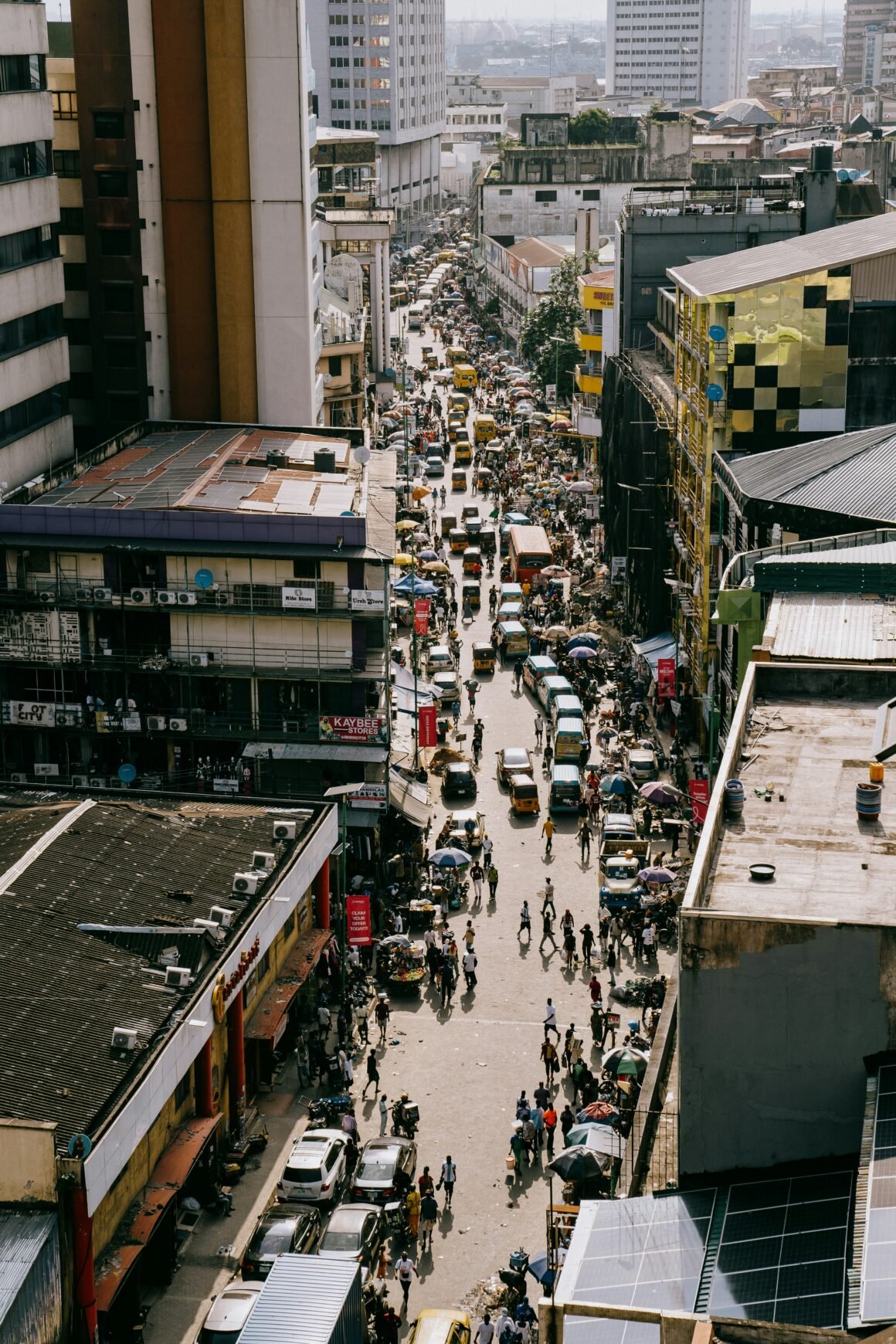
—Fahd Aminu (Unsplash)
Reviewed:
The Yahoo Boys: Love, Deception, and the Real Lives of Nigeria’s Romance Scammers
Carlos Barragán
Orion, 11 June, 2026, 304 pp., ₦20,000
When the Spanish journalist Carlos Barragán announced the publication of his first book in June, a part of the Internet went berserk. Suspicions flew, accusations splattered in the comments.
This review will not rehash any of those ludicrous claims. Not because this reviewer thinks them unfounded, but because this reviewer finds them deeply dishonest. To purport that Internet fraud—the version known as yahoo-yahoo in these parts—is a problem contained within the borders of Nigeria and should be addressed by Nigerians alone is not only a grave misunderstanding of the situation, but an injustice to the victims of these scams; it is to claim ownership of a story that is not completely yours, a denial of victims and relations of victims the right to understand the story of a people whose nocturnal operations have upended many a life.
And Barragán does have a personal stake in the matter: his mother once fell in love with one of these romance con artists. The book had in fact started out as ‘an impossible attempt to understand why she had fallen in love with someone who did not exist.’
In The Yahoo Boys (2026), Barragán traces the ordinary lives of Internet love scammers living and scamming from Lagos, Nigeria. The first, Biggie, at 30 years old, has never held a regular job. He came to yahoo at 19, longing for the purchase power of knock-off designer clothes and shoes that his friends had. Biggie, however, blames Nigeria’s economic situation: “Do you have a solution to unemployment? If you say I should stop this hustle I’ve been doing for years, would you give me a job? That will pay me more than I am collecting? If you can’t answer that question, then you can’t judge me,’ he says.
Can one blame him though? The weight and speed of fraud money is near unparalleled. Another scammer, Chibuike, had pulled a total of €78,000 from a single client in a span of 48 months. ‘To put this in perspective,’ Barragan explains, ‘it would take several years for a highly skilled Nigerian doctor with decades of experience working in a top hospital in Lagos to earn that amount.’
Chibuike himself was raised by his grandfather and would later go on to live with his stepfather and mother, a woman who had him as a teenager, and refuses the boy the right to address him as mom. He started out bagging sachet water at a factory, then picked up Yahoo in the streets of Ikotun; and on his first cashout, made more than he had ever earned in the 18 months he spent at the pure water factory. But this wealth would not last long, like that of many other Yahoo boys: theirs is more than a job; it is a lifestyle that makes its own demands on its people.
For many Yahoo boys, it is not enough to simply make money and break away from poverty—others must bear witness to your making it. Has one really made it if one’s neighbours do not know that one has made it? Are you there if no one acknowledges that you are? This necessitates what many call doings, that ostentatious display of the newly-moneyed that has become synonymous with Lagos nightlife. Chibuike blew his on hotels and drugs, gifts and luxury clothing, living a life ensnared by loneliness and a methamphetamine addiction. When Barragán meets him—‘broomstick thin’ in ‘dirty clothes that smelled of sour sweat’—he can hardly believe that this man could possibly have swindled an Irish woman of €78,000, making promises that never materialised, yet kept the woman shackled to his wiles for the entirety of four years.
While the currency may be money for these boys, it is the allure of a connection that bounds their victims to them. Across the oceans, in countries with functioning economies and social networks that seek to provide connections, men and women are longing for time and attention, for the proof of a shared humanity. Trisha, a woman whose dealings with Richie, one of the subjects of the book, wrecked her life and rendered her bankrupt, calls it a ‘five-second window.’ ‘I just wanted to feel seen,’ she told Barragán. ‘Like I wasn’t a piece of shit. I just needed someone to say, this is a human being, for five seconds.’ Barragan’s own mother whose story set the wheels of the book in motion had spent all her life being a daughter, a wife and a mother, and, in an email to her scammer, wanted ‘someone to take care’ of her. But in the hands of these boys, the consequences of this pursuit are dire.
Some of them try to justify their actions by making lofty but deflated cases about fraud being retaliations for racism or the transatlantic slave trade. Some others claim to have merited their profits by virtue of having invested time, money and energy into developing relationships with their victims. Many of these fraudsters, however, are clear-eyed about the work they do and its implications. Like Miracle, the only woman Yahoo Boy whose story the book follows.
Miracle was born a miracle, having been declared dead at birth, only to pull a Lazarus after being dug up and prayed over. In university, her life quickly goes downhill: her mother dies and in an attempt to make something of her life, she finds herself trapped in a sex trafficking ring. She is later rescued by the authorities after gruelling months. Back in Nigeria, she is introduced to fraud by a boyfriend, but craftily sets up shop on her own, using her femaleness to her benefit. ‘She synced her white persona with her real emotions. If she had her period, the white woman had her period. If she felt sad, the white woman felt sad. If she had a headache, so did the white woman… Before long, she was cashing out hundreds of dollars from American men.’ Miracle sometimes developed sympathy for her victims, but rarely made excuses for herself; ‘she understood the cruelty of her actions’ with ‘unnerving lucidity.’
‘Yahoo was not a blessed way out of poverty, but a trap,’ Barragán reflects. However trapping the cycle may be, for many of these boys it is in fact a blessed way out of poverty—perhaps the only way available to them. Take Azeez, for example. He has been raised in a small matriarchal family with honesty and hard work at the centre of their values, but has lived a life so thoroughly drenched in poverty he has been stripped of ‘the usual naiveté and hopes of a child, but still lacked the direction and means to become a man.’ Just as Azeez’s mother fails to pay the fee that would secure his place in a community secondary school, she is unable to complete the money for his tailoring apprenticeship. Hence, Azeez remains stuck in a cycle of waiting and watching. But their poverty is not a personal failing. Poverty rarely is. They are merely victims of a system that has been engineered by the country’s wealthiest, such that regular Nigerians are fighting, raging against an economy that is rigged against them. For boys like Azeez, compassion is costly and fraud is a blessed way out—if only for a time.
Throughout the book, Barragán’s tone is warm and humane and carefully observant, but never voyeuristic for the sake of it. Because Ikotun, that small, untidy corner of Lagos, is as central to the story as the boys themselves, his observations are marked by the gaze of the outsider, its distantly watchful diction alert to quotidian details that a local may miss or describe differently. Take, for example, this passage on Igando Market: ‘He was picking his way through Igando Market’s din of generators, the beep-beep-beep of bright yellow kekes and sun-peeled okadas, the shrill calls from loudspeakers advertising phone data plans or a free health check… Hawkers zigzagged through the blinding swirl of color with bulging plastic baggies, calling out “Pure water! Pure water!” Dust mixed in the air with the sweet smell of freshly boiled corn.’
In addition, Barragán is entangled in the entirety of the reportage—sometimes as a son trying to understand the machinations behind his mother’s predicament, other times as a journalist seeking truths through webs of fabrications and blanketed memories, and always as an empath trying to see others, and in seeing others attempt to make them acknowledge the horrors their own attempts to make a living in an impossible nation has wrecked on lives across the oceans, lives different from theirs, but united by a shared humanity and technological companies that continue to make profits on the backs of their failed projects of connecting humanity. At all times, he writes with a sustained clarity, keen on answers, yet aware of the distortions that beleaguer the path to the emergence of those truths.
In The Yahoo Boys, he has offered us an astonishing work of narrative nonfiction, one that in no distant time will serve as a great resource for anyone looking to grasp the world of Internet romance scams in Nigeria.
Azubuike Obi is an Igbo storyteller who believes in the transformative power of language. He won second place in The Republic Student Writing Competition (2025), and was nominated for Chika Unigwe’s Awele Creative Trust Award (2024). His fiction and nonfiction have appeared online and in print in The Republic, The Weganda Review, Naira Stories, Afrocritik, Afapinen, Efiko Magazine, and elsewhere.