I.
On December 20, 2025, Brymo announced the title of his upcoming album to mild controversy—something he has become synonymous with in the last couple of years, even more than his music. Although his album titles are known for their concept-driven, sometimes peculiar nomenclature—Klitoris (2016) comes to mind—Shaitan takes the cake. It was a bold title for an album released in a country where Satan is the prime antagonist in the two dominant religions. Brymo also declared himself “Shaitan in the flesh” in the weeks leading up to the album’s release. The context of this proclamation seemed unrelated to the album’s promotion, which made it even more concerning.
Since Merchants, Dealers & Slaves (MDS), Brymo has consistently set himself and his music apart from the mainstream. If you say there is a glimpse of the man in his music, you would be right. He is a wizard on Oso, his sixth studio album, released in March 2018, which many have touted as his best yet. This is to say that every album is a revelation of the man himself—he has called it a malady to separate him from his art. If that is true, then his latest album, Shaitan, is no different.
Brymo did not come fully formed. He leaned towards American R&B and Pop in his early years. R. Kelly’s influence was heavy on his first album, Brymstone (2007). There was also the spark of his pen game. It was, however, his catchy chorus on Ice Prince’s “Oleku” that brought him to the limelight. What Brymo lacked in vocal range, he made up for with his soulful baritone. He was already signed to Chocolate City, and his only album with the label, The Son of a Kapenta (2012), was released the next year.
“Ara,” the album’s breakthrough single, is heavily influenced by Fuji and Juju music. The song’s chorus, drenched in Pentecostal-speak, could almost pass as a gospel tune. It is a declaration of the wonders to be performed; a prayer that his destiny shall not be altered, and it closes with Brymo proclaiming an abundance of wealth, offspring, and joy. “Good Morning,” another standout song from the album, is a contemporary R&B tune with a hint of a West African groove. The griot in him is on display in “1986,” an ode to motherhood.
That dirty divorce from record label Chocolate City brought about a metamorphosis in Brymo’s music. One could hardly find the Brymo of The Son of a Kapenta in Merchants, Dealers & Slaves (MDS), his first post-Chocolate City album. The album marked an era of socially conscious songs drenched in soulful lyricism.
Tabula Rasa (2014) suggests a clean slate, but that album shares the soul of MDS. Klitoris is more confrontational. Call it Brymo’s “fuck you” album, a statement that Brymo is not afraid of controversy. It is no surprise that he reached his esoteric peak on the album that followed, Oso, with the controversial music video where he appeared naked.
Yellow (2020) marks a new dimension for Brymo. He showcases his songwriting mastery in the album, divided into three parts. The first comprises six songs written fully in English. The middle section had five songs written in pidgin English, and the final was in Yoruba. The album would have been better without the first track, “Esprit de Corps,” but the rest of the album made up for that shaky start, with Brymo ending the album with the well-deserved self-adulation in “Afeèdù Fẹ́ná”. It pales slightly next to Oso, but it shows considerable maturity of thought and songwriting. However, this is where he plateaued. What follows in Esan and Harmattan & Winter (2021) are Brymo’s most concept-heavy albums. There is a hint of the metaphysical in Esan’s folksy songs, but his songwriting wavers in the ballads on Harmattan & Winter, where he explores the human experience. On Theta and Macabre, Brymo turned completely toward alternative sounds—electric rock, dark pop, reggae—pursuing what he calls sonic artistry.
Art excels in different ways. Some works are not critically regarded but are commercially successful. Then there are cult classics, which result when an artist creates art in a form, style, or language that is only appreciated by those with a specific sensibility. Such artists are often regarded as geniuses, as though the popularity or lack thereof of their art is proof of a depth that the “shallow” population cannot access. Yes, deep calls unto deep, but a cult following is not always a product of genius; it could merely be a shared taste, a collective desire to reject the style that dominates the zeitgeist.
Brymo is an artist who has carved out a niche, earning a following that considers him a genius. This writer is among them. Art is telepathic; you hear, see, and understand the mind of the artist as though it were your own. I feel this way listening to many of Brymo’s songs. I have wept while listening to “Entropy,” as the meaning and beauty of the song washed over me.
My taste in music was shaped early. I grew up steeped in Fuji—the meaningful songs of Barrister; Ayinla’s esoteric Apala, and Osupa Saheed’s moral parables. My father introduced me to Bob Marley’s political consciousness songs; we listened to Baba Ara braid gospel with existentialist philosophy. This is why music, to me, is as much about meaning as it is about melody and rhythm. Afrobeats has rarely concerned itself with this until Brymo came along with MDS. I liked Brymo the popstar on The Son of a Kapenta, but I became a fanatic after Merchants, Dealers & Slaves.

II
Music is also psychokinetic in that it gives shape to abstractions. The artist takes an idea or imagination and weaves it into a form people can hear, see, and touch. This is what God did in the beginning, weaving the music of existence with His word. This is why artists partake in godhood. When art is perfect, one sees abstractions take perfect form. You understand what the artist is communicating without them being physically present. You journey into the artist’s mind and understand the fragment of his soul that he has rubbed onto his creation. This is why it is almost impossible to love or hate the art whilst remaining indifferent towards the artist. If this were the case, the art would have failed. Art must elicit feelings—towards it and towards the artist.
But there can sometimes be a dissonance between content and form when the form fails to convey the idea. And this is Shaitan’s flaw: Brymo’s unclear vocals muffle the lyrics, melody is barely a consideration, and rhythm feels like lead.
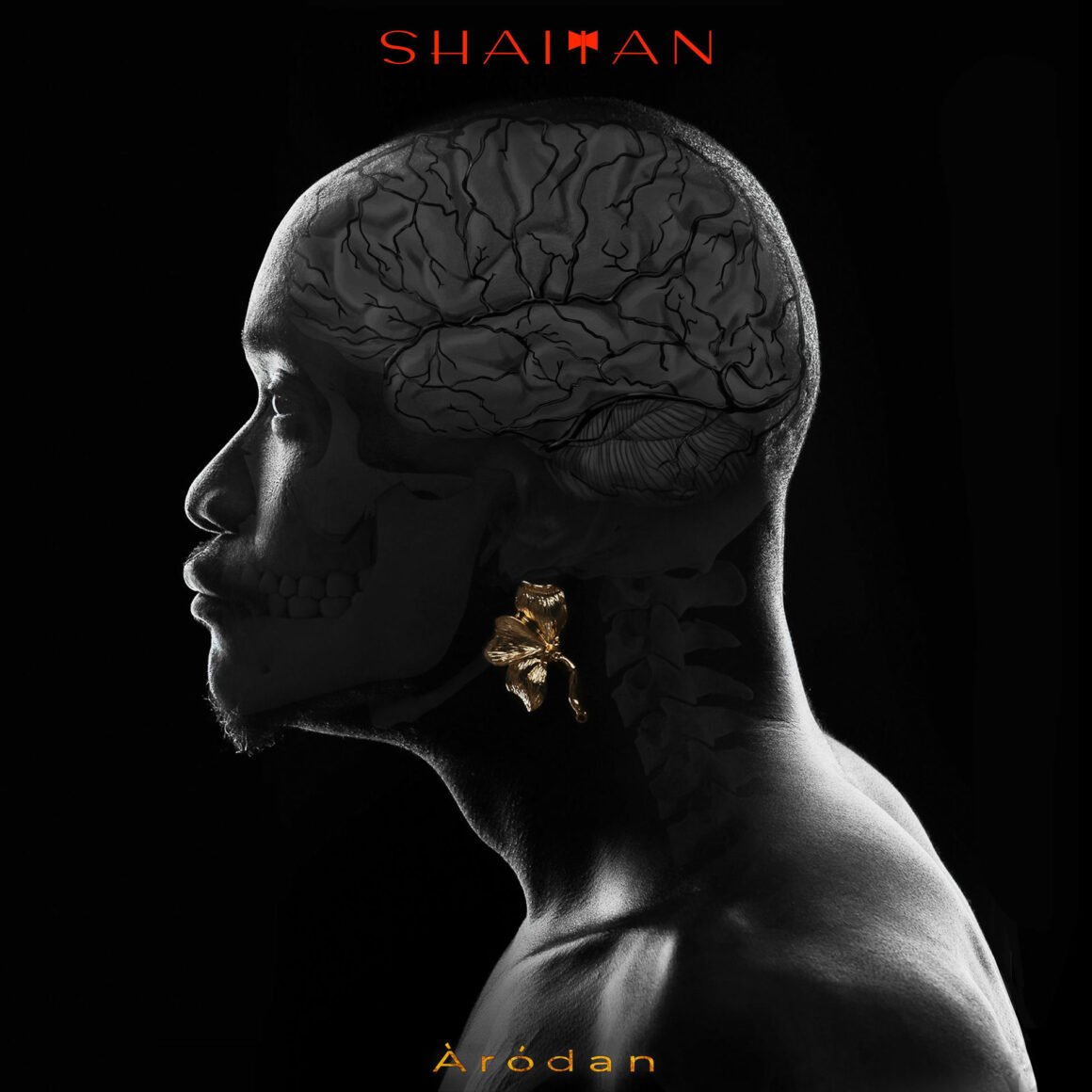
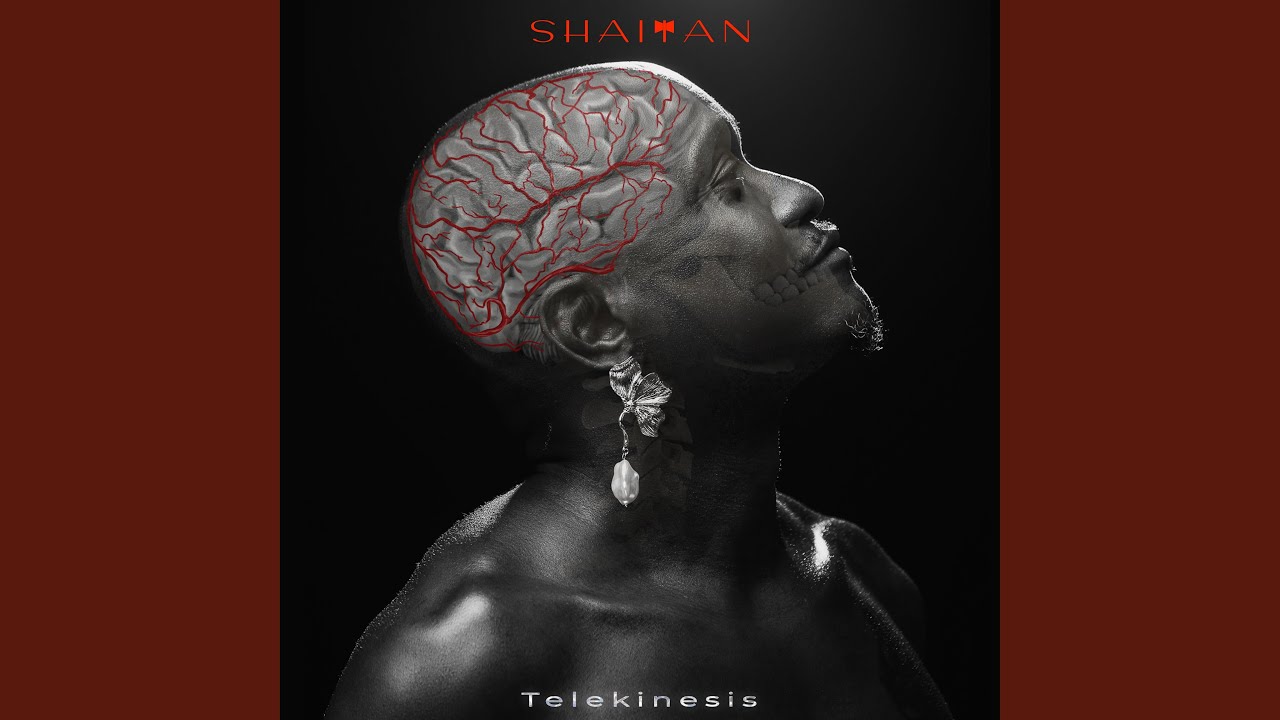
Shaitan is a double album: Arodan, sung mostly in Yoruba, and Telekinesis, sung in English. The album, produced, mixed, and mastered by Linobeats, runs about 25 minutes. Arodan opens with the album’s eponymous track. Piano chords usher Brymo in as he sings: Ọ̀kan nínú mẹ́rin t’ẹní kọ́’n lọ gba àródan wá, Mo ti wa ò, mo ti ri ò, Ẹ gba àródan yín kúrò lọ́wọ́ mi o, Ẹ ma ba yí o, which translates in English as, “One of the four you sent to chase a mirage, I have found it, I have seen it, take your mirage from my hand, it is yours.”
Arodan is a fool’s errand. You send an errant child on a wild goose chase for something that does not exist. Yet Brymo sings that he has found it and is now returning it. Perhaps this is the song persona growing up and accepting the futility of his chase, or a rebellion against the pointless errand he has been set upon. Brymo does not expound on this. There are times when the message of a song is better when contrived; when the artist allows listeners to sit with the song and find meaning for themselves. Is this Brymo’s aim?
The next track on Arodan is “Okiki”—fame. On this track, he is a sojourner yet to find a home or acceptance. He has refused to participate in the ritual of acceptance, for he will not ditch the truth for anything, least of all for fame. It is as he sings in “Heaven Street” from Telekinesis: Who cares for unrequited love? Because I don’t, anymore. Rather live in the throes of my own hell. Just as Shaitan rejects heaven for his own hellish freedom, the persona in “Okiki” rejects popular acceptance for the freedom of being his own person.
If Brymo boldly gave his son words of wisdom in “Olanrewaju,” he appeals for his own shortcomings in “Omo mi Owon.” “I am not wise enough,” he pleads to his son. But then again, like Shaitan, he declares God Himself not sufficiently wise.
Even though Shaitan is a persona Brymo has chosen to wear for this project, it is in tracks like this that his self-examination comes to the fore. Here is a man who boasts of his virtue and acknowledges his deepest flaws at the same time. And who knows this man better than himself? Self-examination leads to self-acceptance, as he sings in “Mother and God”: Holy Mary, mother and God / Who the hell do I think I am / Holy molly, everyone is taken / I’m thinking I prefer who I am.
Brymo often postures as a moralist. Many of his songs not only speak of the human condition but also preach and teach. This is the case with “Ìkóríra,” where he preaches against contempt for one’s neighbour.
His multiplicity as an artist quickly shows in “Ìyá Àwẹ̀lé,” a song about an illicit affair. The moralist is also a hedonist. Here, however, unlike in songs like “Fe Mi”, where the erotic was wrapped in poetry, he is vulgar. The lyricism in “Ìyá Àwẹ̀lé” disappoints—the erotic is beautiful when rendered in subtle language.
“Mádàríkàn” is about his invincibility, much like “Barbs of Steel.” “Mádàríkàn” is a dare—the boast of a man who has fortified himself and challenges his enemies to take a swing. He is assured of their futility, just as the rock knows the egg that throws itself against it self-destructs.
The two sides of this album are not so much a study in duality as complementary sides. Brymo inhabits the same psyche on both sides. “Wild Goose Chase” in Telekinesis is a repeat rendition of Arodan. A heaviness dominates both sides of the album—a dark mood characterised by an absence of vocal clarity. On every track, one struggles to hear what Brymo is singing. He grunts, and one must strain to hear him.
In “Osika,” he mumbles his affliction: Mo tara mi lọ́pọ̀, f’òṣìkà, f’òṣìkà, N ó jẹ̀yà ẹ̀ṣẹ̀ mi, ẹ̀ṣẹ̀ mi, ẹ̀ṣẹ̀ mi—I have sold myself cheaply to the wicked and now, I bear the reward of my sins. One can almost hear the despair in his voice, even when the words are obscured. What is this great sin? The illicit affair in “Iya Awele”? His rebellion against God? Or a sin against himself? One struggles to hear him in “Warlord” or “Warlock,” but you get the picture of a troubled mind. What is this penance for? Why does this album possess such a dark mood?
There have been arguments that Brymo has sacrificed melody for meaning. This may explain why melody is lacking in most of these tracks. But music is as much about melody as it is about meaning. It is about feeling. In Shaitan, it is as though Brymo sings for himself. The murky voice, compounded by the songwriting’s weakness, makes for an exhausting listening experience, offering no incentive for a second spin. I have read that Brymo has since retracted into himself, given that the world has refused to give him his flowers. But music is intended to be shared; it is an invitation to fellowship. Melody, whether sombre or joyful, creates the mood upon which listeners congregate. This is absent in Shaitan. Weighed against the excellence of his early projects, or even the albums that followed Yellow — Theta (2022) and Macabre (2023), this is Brymo’s most underwhelming album.
__________
Adeola Juwon is the author of Ellipsis and Songs for Ori. His poems and reviews have been published on AfricanWriter, Afrocritik, Icefloe Press, The Newcastle Review and elsewhere. He is poetry editor at Lion & Lilac. He lives in Oxford, England.