
“tree tunnel” by rambla is licensed under CC BY-ND 2.0.
“Nothing says ‘developing country’ like getting off an international flight at Murtala Muhammed,” Farah said, coming out of her sister’s embrace. “Immobile escalators, the patch-patch carousel in the baggage hall with huge gaping holes in it, the leaky roof – they had a bucket out to catch raindrops, right there in the middle of the floor, would you believe it?”
“Leaky roof too? Arghh.” Deola covered her face in mock shame. She took charge of the trolley and wheeled towards the exit.
“Chaos to get the bags, people milling about that had no business being there, inserting themselves into everything. Chaos to get the trolley, chaos everywhere.”
“You ain’t seen nothing yet. Wait till we get outside.”
“Customs officers were moving mad at Nothing To Declare, wanting to rummage through my luggage for no reason.”
“Anything to get you to part with some of that hard currency, missy.”
They came out into the wet and humid night. Deola arched her upper body over the trolley, eyes alert, fending off loiters in their path, and hustlers trying to wrench the trolley out of her hands in a forced show of help in the quest for tips.
“Stay close to me,” she told Farah.
Deola had used her connections to gain privileged access to the Arrival Hall. Only passengers were allowed in the terminal; people meeting their loved ones had to wait out in the open.
Farah frowned. “You shouldn’t cut corners for me, Deola. I’m not comfortable with that.”
“And the alternative is what, leave you to fight through the melee while I wait a mile away?” With a sweep of her hand, she drew a wide arc at persons crowding their path, trying to interest them in one thing or another.
Taxi? Currency exchange? Anything for the boys? Nothing? Don’t be like that.
The car park did seem a mile away. First, a pitted walk through a covered walkway, open at the sides. More like an obstacle course, hustlers all up in their faces. After the walkway, Deola manoeuvred the trolley up or down a ledge, out of the way of others and the odd vehicle stationed on the cordoned-off road, as they walked the dogged path towards the multi-level car park. Ahead of them were scores of people with guardedly expectant faces, standing – in a poorly lit open space of no particular designation – for travellers they’d come to meet. Farah saw the alternative to Deola getting into the Arrival Hall: wait out here in near-darkness and with strangers, getting shoved in the spitting rain. She wondered if she had been fair, questioning Deola’s judgement. Farah looked at her sister, busy parting through the crowd with the trolley.
“Excuse me, excuse me,” Deola called out, to get people to shuffle aside, some ever so hesitant, as she battled the trolley’s stiff wheels.
“How are we getting out of here?” Farah’s eyes darted about. She held tight to her handbag. “Is your driver here?”
“I gave him the time off while you’re here to go attend to his sick mum in Ikorodu.” Deola said in a raised voice, to be heard above the noise and bustle. “I wanted a watertight arrangement, especially as you’re concerned about security.”
“And what arrangement is that?” Farah caught up with her sister, as they curved trolley-first into the car park.
“A cousin of ours, he’s waiting with the car. He’s with the Joint Defence Combat Force and has taken the week off to be with us, to manage logistics. How wonderful is that!”
Farah wasn’t so sure, as the car pulled into the pick-up spot and the cousin hopped out, genuflecting from his great height as he greeted her welcome.
Farah stiffened. She had never seen his face before, she didn’t think so.
***
She had not been sure, three days before, if she would make the trip. In her bathroom in Brooklyn, she had kept her eyes fastened on the rapid test kit, pensive as the second red line appeared. Her first trip home since becoming an American citizen, and it was in jeopardy.
Earlier that day, the U.S. Department of State issued a new travel advisory. ‘Reconsider travel to Nigeria due to crime, civil unrest, kidnapping and maritime crime.’
Farah put a WhatsApp call through to Deola, leaving the test kit as she walked to the living room. The test had receded to the back of her mind by the time Deola answered. The travel advisory listed the parts of the country categorised as red zones – Do Not Travel to These Areas – Farah blubbered to her sister. Email and telephone number were provided, for emergency assistance to U.S. citizens.
“There won’t be any need for emergency assistance, in Jesus’ name,” her sister had said. “And we’re not going anywhere near the red zones.”
Farah bit her lip. She wondered what Jesus had to do with heightened insecurity and random everyday threats. Her sister talked like this sometimes, Jesus this, Jesus that. Many of Farah’s regular contacts, friends and family in Nigeria, peppered conversations with Jesus too, outsourcing to God that which a working system ought to have obliterated from the citizen’s daily concerns. She reeled out more details from the advisory, the bits she could recall. She had stopped short of reading the entire thing, for fear she might cave in and cancel her flight, a non-refundable ticket.
“The travel advisory says violent crime has spiked up exponentially. Armed robbery – I mean, that’s been there since time immemorial, right? It’s these new threats I fear most, kidnapping for ransom, carjacking on interstate roads, stuff like that.” Farah paused in the hope her sister might say something. If Deola so much as agreed the situation was as dire as reported, she would not get on that flight. Silence on the other end, so she continued. “It’s not just the travel advisory. I mean, we all see the news, right? And all the stuff on social media. Scary!”
“It’s troubling, I know, Faramádé. And it’s back on the rise, now that lockdown is lifted.”
“Farah. I go by Farah now. Get used to it, will you?”
“I’m used to it well enough, but it’s not me you need to worry about. When we get to the funeral in our small town, you’re going to tell extended relations to call you Farah, ehn? Even folks older than our parents? Mum will think she failed, for sure.”
“We’ll deal with that when we get to it.”
Farah heard her sister draw a long breath, but she knew her too well to think that capitulation was in the offing. When they were young, Deola had a smaller frame despite being two years older. She was quieter and more accepting, more giving; if they shared a bottle of Coke, or sugar-dusted puff-puff on a plate, she didn’t mind if she got the smaller portion. But she could stick up for herself at the most unexpected turn. Like the time she insisted their mum had promised her the yellow dress and she wasn’t going to give it up just because Faramádé’s greedy-insect eyes had settled on the same. Deola said the dress went well with buttercups she had picked from a nearby field. Those were the days, before anyone ever heard of kidnapping for ransom.
“Anyway, about your trip,” Deola said. “Nigeria is hard, but it’s not quite the shithole country your former president will have you believe it is. We’ve just got to act responsibly and weigh the risks with clear eyes while you’re here. Same as we do every day. So, if you can manage your expectations just a teeny-weeny bit, and listen to those of us who know the terrain, you’ll be fine. We’ll have fun!”
Farah ran a finger along a picture frame on a mantelpiece in the upper floor of the brownstone apartment she shared with Jaheim. His hair was now different from the picture. Grown bushy during the first lockdown, he had embraced the length and now wore it in a bun. One reason she hadn’t sent any recent pictures to family. Her parents would wonder, and she didn’t yet have the energy for that conversation. Maybe he would grow out of it soon, she thought, a smile creasing her features. She touched Jaheim’s nose through the Perspex of the picture frame, and the thought shot through her like an arrow, that she had not asked how her sister was doing since the death of her husband, lost to the virus eight months before. Farah thought of the two red lines on the rapid test kit. Now, this was why she had pushed it to the back of her mind, why she couldn’t bring it up just now. Her sister had been through so much.
“How are you, Deola?” Farah asked in a softer tone.
“Me? Oh, well enough, I guess. Coping. No high impact exercise for me for now. Reduced lung capacity from the Corona. Other than that, I’m good.”
“Sure?”
“Yeah, sure. Get over here, will you? I miss you and can’t wait to see you.”
“I miss you too…”
“That’s settled then. I’ll be waiting for you at the airport. Forget about the travel advisory. Things go bump in America too, and I’m yet to see a travel advisory warning against travel to the U.S.”
Farah made a face. “Try telling that to Jaheim.”
She heard her husband turn his key in the lock downstairs and she made a quick dash to the bathroom. She shoved the rapid test kit in the space between the sink cabinet and the floor. Hard enough persuading Jaheim of the need to fly home for her grandfather’s burial with the travel advisory out.
***
Farah woke up to the Lagos morning in the upstairs guest bedroom of her sister’s house in Gbagada. She put the finishing touches to her minimal makeup, thankful that Deola already had a tailor make her aṣọ-ẹbí for the funeral party in their hometown, ahead of her arrival. Packing her case for the trip, Farah took another look at the frothy pink Ankara which almost everyone would wear as commemorative family-cloth for the occasion. Their grandfather had lived out his full years, taking his leave at ninety-five; and this was to be a celebration of his life. He had been a school proprietor who made significant contributions to education in their hometown and beyond, and now the whole clan would gather for his last hurrah. “Promise you will come back and see me soon,” the old man had said, when Farah announced that she was off to America. Now she would see him again for one last time, but not in the way she had planned.
She heard a splash and went to the window, edging a slit in the curtain from its middle parting. The cousin from last night, wiping down the car. Farah drew back a fraction when he turned his head to look up, some Spider-sense that he was being watched. He was a bit wet, so he took off his T-shirt as he headed inside. As he walked out of her line of sight, she got a fleeting look at the eagle inked in flight on his left shoulder, the scar tissue from slash marks on his back. Where had he been, she wondered? What kind of life had he lived? She had heard of crime victims set up by people they knew. And she didn’t even know this one. What if he was in some deadly street cult rather than the JDCF as he’d led Deola to believe? How to tell her she didn’t trust him, didn’t feel comfortable with him and didn’t want him driving them across state lines? The night before, he had greeted her affably enough, his pupils glittering dark, so much so that Farah thought she saw a haunting in them. He called her Sis Faramádé, and she found that she could not correct him, because to ask him to call her Farah would underline even more the distance between them. She felt certain that he would frown inwardly at what he’d likely see as her betrayal in tweaking her name to suit America, because he was too limited to understand her motivations or her journey.
Deola knocked and entered. “Breakfast is ready,” she said brightly. “I’ve informed Owolabi too. He’s almost done with the car.”
“How is he related to us again?” Farah asked, moving away from the window to continue packing. “And do we have to go with him? He creeps me out.”
“How could you not remember him? He lived with us for four years.”
“How am I supposed to remember? All those poor relatives taken in by our bleeding-heart mum. They were a blur after a while.”
Deola sat on the bed. “Owolabi wasn’t just anybody, wasn’t just some ‘poor relative’. It would crush him if he heard you say that.”
“Well, how come you know him and I don’t?”
“Because I paid attention, Farah. And I kept in touch with him after he left for college; you forgot him even while he was still in the house with us. He’s a good lad. Shunted from relative to relative after his parents’ divorce, he fell in with the wrong crowd. And then somehow, he ended up with us. He credits us with helping to turn his life around. And he adores you especially, but you never paid him any mind. So, how would you remember someone you never gave a second’s thought?”
“Well, if I was so haughty towards him, how come he ‘adores’ me so much?”
“Because sometimes we get cousins we don’t deserve.” Deola got up, all chirpy. “And now, he’s our protector, bound to us by blood. We don’t have to go hire MOPOL operatives to guard us on this trip like some in the moneyed class do. Aren’t we lucky?”
Not quite my definition of luck, Farah thought, as she shut the travel case.
***
“So glad I got to see the boys,” Farah said to Deola, as they were about leaving for the airport. The day before, they had gone on Visiting Day to Deola’s two sons at their boarding school, and filled them in on the funeral party in the hometown. They talked only about the fun bits – the endless faces, the colourful clothes, the live band, the spraying of currency notes on the dance floor. They said nothing of what happened on the way back. Or what nearly happened.
“Yeah, I’m glad too. Did you see the looks on their faces? To see their aunty after all these years! I’ve assured them you’ll come home more regularly now. You will, won’t you?”
“Oh yeah, and with a little cousin in tow.”
“Really?”
Farah said she found out just before she flew out, but kept it to herself, because Jaheim would not have agreed to her travelling in that condition. They’d been trying for a while.
“Oh my gosh.” Deola blinked away tears and clamped her palms to her chest. “Now I’m doubly glad nothing happened to us on that road!”
Owolabi came in to help with Farah’s things, as did Deola’s housekeeper, Korede, who had also gone to the hometown with them, and was in the front passenger seat for their close shave. Farah placed a hand on Owolabi’s rippling shoulder as he wheeled her suitcase towards the car. Her dependable cousin. A sentiment that would have been impossible three days before, when they said their farewells to folks in their hometown and set off for the long journey back to Lagos.
***
An alternative route to circumvent a road construction logjam. As they drove through sleepy towns and long stretches of forest, Farah shot questions at Owolabi, as she had done all through the journey, about the intervening years, his work with the JDCF, about kidnappers, armed robbers, Boko Haram, the lot. She ignored surreptitious text messages from Deola which pleaded, “Stop goading him, stop harassing him.”
“Have you foiled a kidnapping before?” Farah addressed the back of Owolabi’s head, her voice edgy with the challenge she’d set herself, to unmask him as not this trustworthy cousin Deola seemed to think he was.
“Yes, sis. Many times,” Owolabi said, eyes darting to the rearview mirror as he negotiated a high speedbump in the road. A town they had just passed, all squat dust-hued bungalows on either side, spread out flat behind them. The road ahead narrowed considerably in comparison.
“And how did you foil those?”
“Vigilance. Quick responsiveness. Timing is crucial.” He weaved this way and that behind a trifling okada rider that was slowing them down. “All it takes to kidnap someone on these roads is thirty seconds. Locals are usually in on it.”
“How do you manage the situation, say, when you have people in the vehicle?” Deola’s curiosity got the better of her, despite her reservations about Farah’s persistent questioning.
“We neutralise the threat and deescalate without alerting the client,” Owolabi said. “Panicked clients are a liability to safe deescalation. We try to avoid that, for their sake as well as ours.”
Farah’s phone buzzed: a WhatsApp message from Jaheim. “I’ve tried calling. I found something… Why didn’t you tell me we’re expecting a baby? I wouldn’t have stopped you going?”
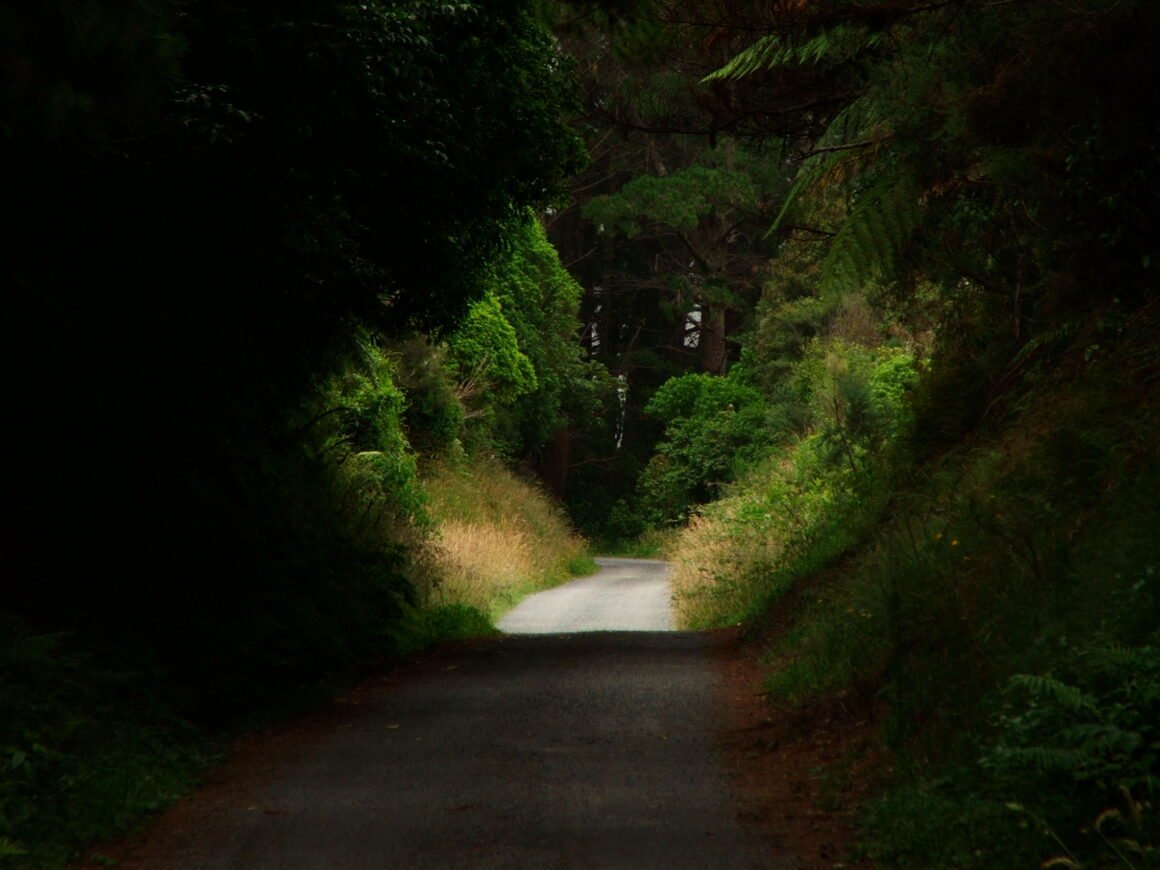
You say that now, Farah thought. She looked up to see that the car was in flaming speed, Owolabi having cut and overtaken the okada. Farah shifted in her seat. She narrowed her eyes, thinking about the beauty of this stretch of road, and something else, something she couldn’t quite put her finger on. The road had a downward sloping aspect, and the sky was wide and blue and silver above, and the vegetation was closing in on both sides. The car picked up speed. Further ahead, the vegetation tunnelled as trees touched branches over the road. The car raced itself towards the tree tunnel, and Farah could hear the rage of tyres burning on asphalt.
“You’re speeding…” she said in her least assured voice since arriving in Nigeria. She kept her eyes glued to the road, thinking it was all so beautiful, the contours of everything around them, tree branches meeting overhead to form a tunnel, like some road in Devon or New Haven with a running brook just behind the first line of trees. But how unusual to see a road left clustered-in with trees in this manner in this region, she wondered, especially after the open expanse of the town just before?
“You’re speeding…” she said again.
There was a man crossing the road ahead, not unaware of the car but walking slowly. Someone with a limp? A vagrant? A vagrant that didn’t hop across on sighting an oncoming vehicle. He wore dark coverings from head to toe. Might as well be a shadow.
“You’re speeding!” Farah injected loudly, her voice tapering into a screech, so that Korede’s head snapped back from the front passenger seat, face pinched with worry.
Owolabi seemed not to hear, all concentration on the road. Deola reached across and patted Farah’s thigh, seeming to say, trust him, trust…
“Slow down!” Farah shouted, heating up the temperature further. “You’re going to kill that guy if you don’t slow down!!”
“He knows what he’s doing, don’t worry.” Deola’s voice was barely above a whisper.
Owolabi stayed focused on the road, and when it didn’t seem he could go any faster, he did. Till they almost hit the person in the road. The man found the speed to move aside, eyes alert and trained on the car, slithering out of the way with serpentine fluidity. The car missed him by a fraction, passing right next to his body, seeming from his fleeting expression a regretful pass.
“Thirty seconds!” Owolabi said as they shot through the tunnel. “Thirty seconds is all it takes!”
“He was alone!” Farah sounded distraught and hysterical to her own ears.
“Accomplices in the bushes, trust me.”
Just past the tunnel, the vegetation opened up and scrolled wide, as though by a stage curtain’s pulley system. Still at breakneck speed, the car slammed into a big pothole suddenly and the engine stalled. Farah hit Owolabi’s headrest repeatedly, oblivious to Deola’s restraining hand.
“You could have killed him! You were going to kill some poor guy because you’re crazy!! Delusional! You think you’re some Dark Knight! You’re no cousin of mine! I don’t know you!!”
“Shut the fuck up!” Owolabi turned to glare at her, his lips curled in a controlled grimace.
Farah looked to her sister, aghast. But Deola only shook her head tearfully. Deola with the reduced lung capacity due to the Corona.
“He’s trying to save us from harm, and you’re making things worse,” she said, her voice quivering.
Farah quietened into a whimper, breathing fast. Owolabi turned the key in the ignition, his upper body jerking in desperation. He looked back to survey the road behind them, and the passengers followed his cue and turned to look through the rear windscreen. Walking towards them was the erstwhile vagrant, but now his gait could not be mistaken for sluggishness. He walked with a slow swagger, with a smirk on his face that said: Got you where I want you. In his right hand, he swung a big club with spikes around its head, and it dawned on Farah that he had the weapon all along. Further back, seen through the vista of the tree tunnel’s mouth, other dark-clothed figures were curling out of the vegetation and becoming distinct, each floating in a spray of light. The okada rider of earlier, proctor-like, watched them come out of the bushes, then turned his motorbike round and sped off. Owolabi had been right all along. Farah’s hands flew to her mouth. She was shaking all over, sweating, eyes not daring to blink.
Owolabi kept trying to start the engine. The car sputtered like a sick mechanical goat at each attempt and faltered. The tyre stayed stuck in the gully. The man with the club was closing in, his henchmen trailing behind. Then Owolabi reached into the glove box and fished out a pistol, slid down the glass of his window, poked out his head and shoulders and fired a single shot. The man dropped onto the asphalt clutching his foot, his howls coming into the car as though from the bottom of a barrel. His accomplices crouched and scurried towards and away from him in jagged lines, like a file of soldier-ants rent asunder. Owolabi turned the key in the ignition again, grunting with all his might. Farah could hardly believe it when the engine roared back to life and – in a hail of dust and the clatter-crunch of gravel – leapt forward. Farah fell into Deola’s arms and the two clung to each other, as Korede hyperventilated in the front seat. Gradually, a sense of quiet and calm returned. The road spread wide and free, and a cumulus cloud drifted above as the tree tunnel receded into the distance behind them.
Farah’s phone vibrated after a while, and she pulled away from her sister to check. Another message from Jaheim: “How are you enjoying Nigeria, by the way? Everything okay?”
***
The car pulled into the drop-off point at Departures, and Deola went off to the trolley rental kiosk, clutching a naira note. Owolabi lifted Farah’s luggage out of the boot. Here they would say their goodbyes, then he would proceed to the car park to wait for Deola.
“I never thanked you for getting us out of that situation back there,” Farah said, hugging her cousin.
“One does not give thanks to oneself, sis,” Owolabi said. “I’m only sorry we gave you such a fright.”
Deola returned with a trolley and beamed at the hugging cousins. “When we were young,” she said, “Owolabi promised he’d never let any harm come to us, and he’s keeping the promise.”
“Sure enough, sis.” Owolabi turned to Farah. “Hope to see you soon.”
He drove off as the sisters appraised the winding queue outside the terminal.
“Did you know there was a gun in the car, though?” Farah asked, head cocked to one side, eyes narrowed.
Deola shook her head. “Nope.”
“I won’t be telling Jaheim about any of it, anyway. It’s just… I dunno.”
“Americans are in no position to lecture anyone about guns, in any case.”
Farah put an arm round her sister’s shoulders as the latter pushed the trolley, and together they joined the queue.
Molara Wood is a writer, journalist and editor based in Lagos; and is the author of “Indigo”, a collection of short stories.